The Publisher's Case Wins
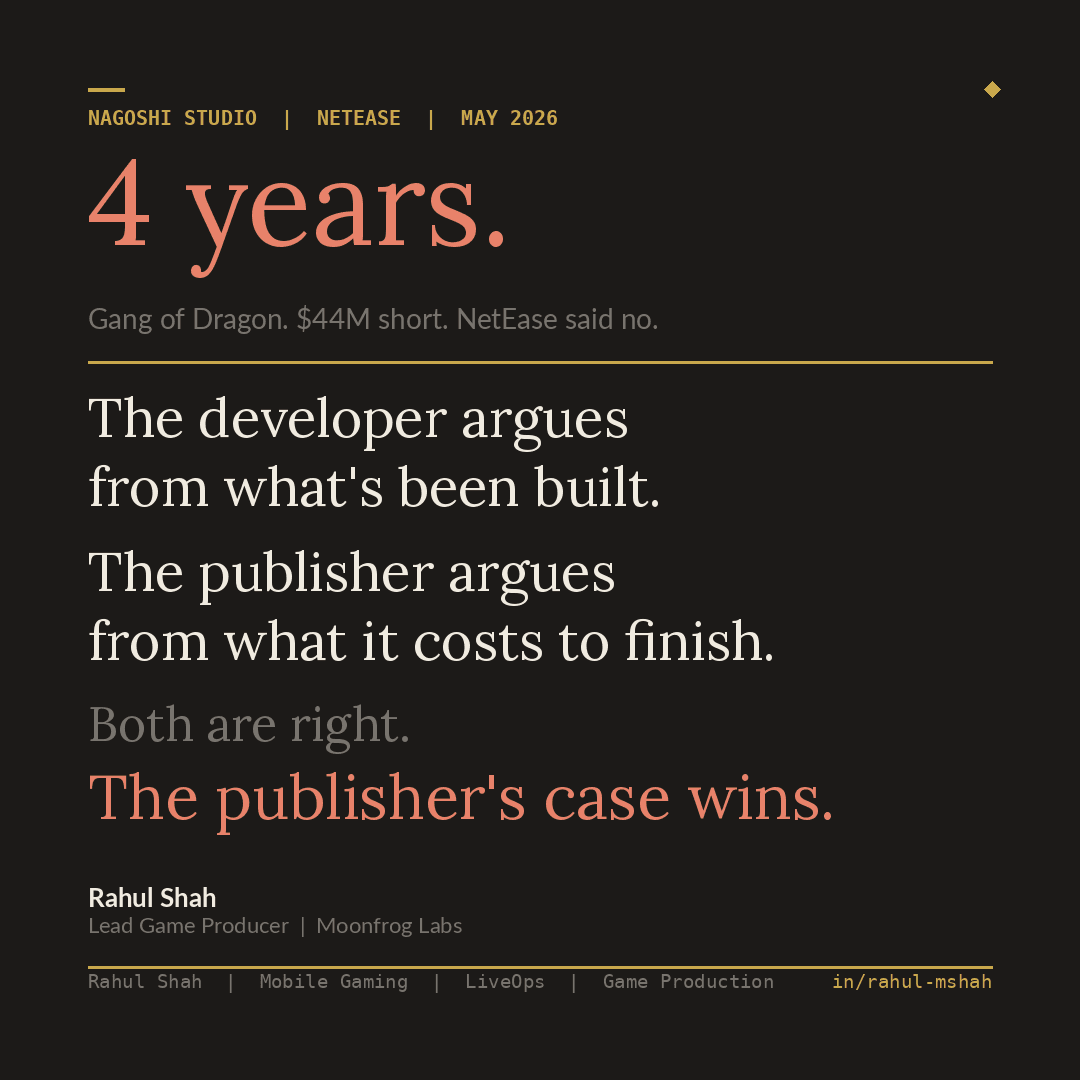
Four years.
That's how long Toshihiro Nagoshi's studio spent on Gang of Dragon before NetEase pulled the funding.
The studio website went dark last month. YouTube channel deleted without notice.
NetEase's position, per Bloomberg: the project needed another ¥7 billion to complete. About $44 million. After four years already spent, they passed.
What I keep coming back to: how predictable this is. You can usually see it from inside the project. You just can't say it out loud.
Game budgets grow in development. Not because teams are careless. Because scope gets clearer as you build. Year one estimates are made with year one information. By year three, you know things you couldn't have known at kickoff. The people on the project know this better than anyone. They also know you can't surface it before the conversation becomes something it shouldn't be yet.
There's a meeting that has a specific shape. Costs run beyond the original estimate. Someone senior starts doing the math on completion vs. walking away. It's not a creative conversation. The developer argues from what's been built. The publisher argues from what it costs to finish. Both are right. The publisher's case wins.
Nagoshi hasn't found alternative funding. NetEase says the studio can keep going if it buys the assets back.
I don't think this is about NetEase making the wrong call. The way large games get funded and the way they actually develop don't match. That gap is where projects die.
How do you plan for it in your own production?
Hashtags
#gamedev #gameproduction #mobilegaming #indiegame #gamestudio #gamesindustry #leadership #productmanagement
Related Posts
- The Second-Hit Problem (2026-05-14) — same studio-survival theme, different angle
- Bias for Action (2026-05-12) — production decision-making under pressure