IP Collaborations: Most Studios Can't Tell If They're Buying Installs or Revenue
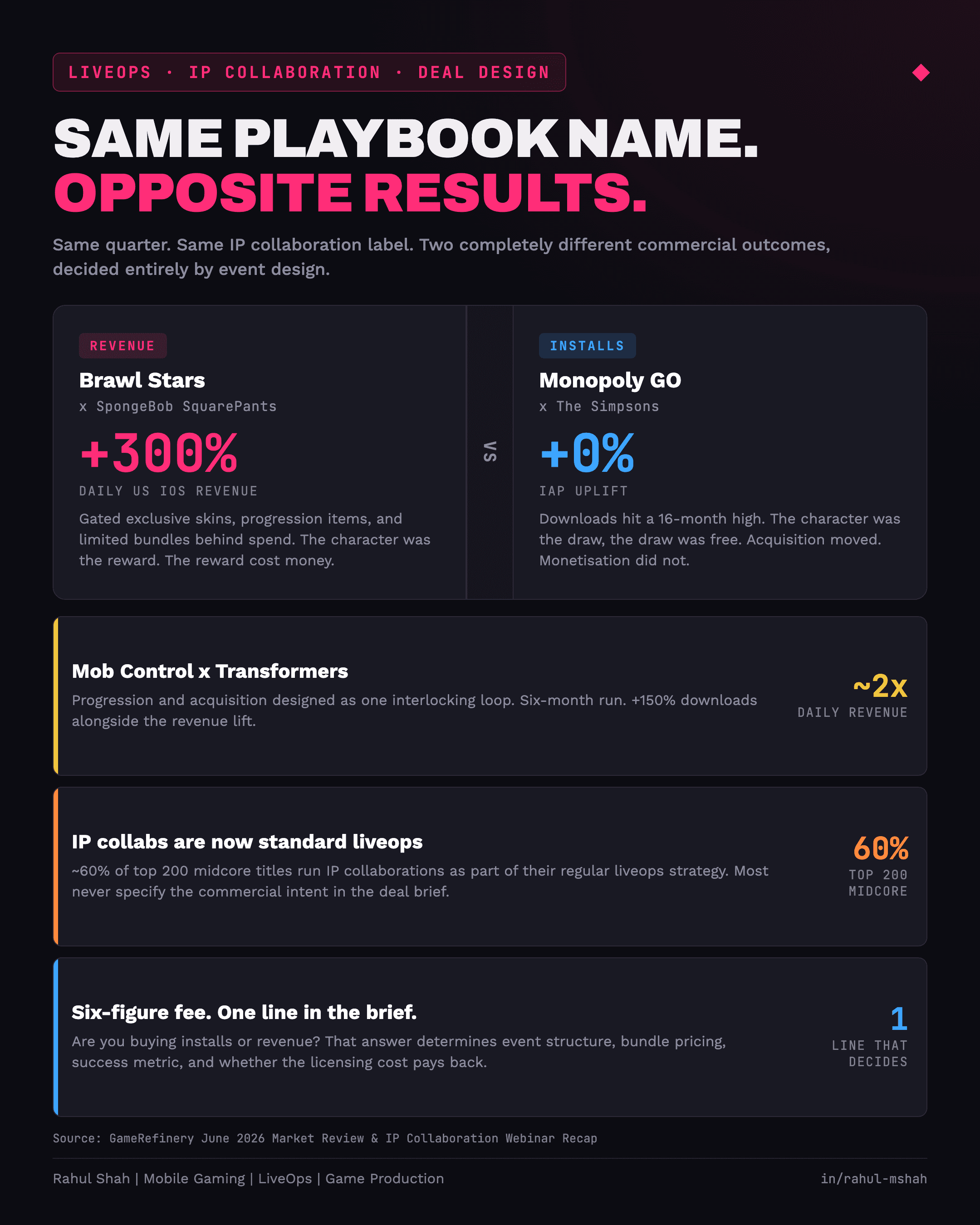
Brawl Stars' SpongeBob collaboration spiked daily US iOS revenue over 300%. Monopoly GO's Simpsons collaboration drove downloads to a 16-month high and did nothing to IAP. Same quarter. Same playbook name. Completely opposite results.
This is the most expensive misalignment in mobile liveops right now, and it happens because IP collaboration contracts are being signed by business development and event-designed by a separate team that never saw the deal brief.
The mechanism is straightforward once you name it. An IP collaboration can do one of two things: bring new players in, or make existing players spend more. It almost never does both unless the event is specifically engineered for it. Monopoly GO's Simpsons event was built around themed content that attracted attention and drove installs; the characters were the draw, the draw was free, and the event moved the acquisition needle without touching monetisation. Brawl Stars' SpongeBob event gated exclusive skins, progression items, and limited bundles behind spend; the characters were the reward, and the reward cost money.
The IP itself didn't determine the outcome. The event design did.
I ran themed events on card games at Moonfrog for years, not IP collaborations at the Supercell or Scopely scale, but the structural problem is identical. When I built a festival-themed event around free cosmetics and social sharing, it drove installs and virality. When I built one around exclusive bundles and gated progression, it drove spend. The mistake I made early on was treating them as the same type of event with different dressing. They are fundamentally different commercial instruments, and the choice between them has to be made before the first creative brief is written.
GameRefinery's June 2026 analysis puts numbers on how wide this gap has become. Mob Control's Transformers deal ran for six months, nearly doubled daily revenue, and lifted downloads 150%, but that's because the progression system and the acquisition mechanic were designed as a single interlocking loop. Almost 60% of top 200 midcore titles now run IP collaborations as part of their liveops strategy. The studios that treat the deal brief as a commercial strategy document, specifying whether they're buying installs or revenue, get outcomes they can forecast. The studios that treat it as a marketing partnership and hand the event to a separate team get whichever outcome the event design happens to produce.
Six-figure licensing fees deserve a one-line answer in the deal brief. That line determines everything downstream: how the event is structured, how the bundles are priced, what the success metric is, and whether the licensing cost pays back. When your BD team closes the next IP deal, does the brief actually say whether you're buying installs or revenue?
gamerefinery.com/mobile-game-market-review-june-2026/ gamerefinery.com/webinar-recap-how-mobile-game-developers-are-using-ip-collaborations-to-enhance-liveops/